How to Choose the Right Medium Frequency Induction Furnace for Metal Melting
Selecting the right induction furnace is one of the most important decisions for a foundry or metal processing plant. Furnace capacity alone does not determine whether a system will provide the required melting performance.
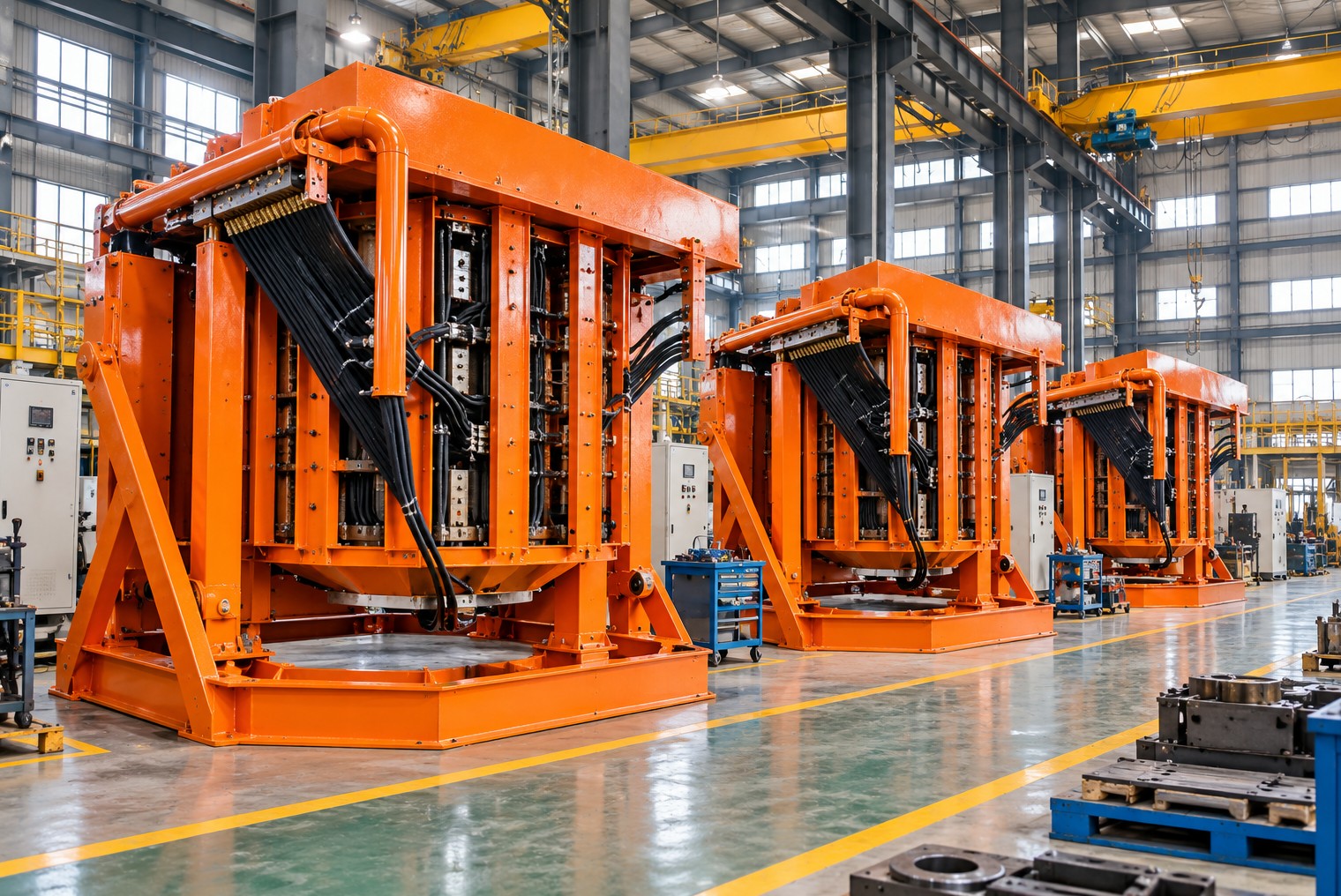
A properly engineered medium frequency induction melting system must consider furnace capacity, metal type, melting rate, power supply, operating frequency, cooling system, tilting method and production requirements.
1. Determine the furnace capacity
The first step is to determine how much molten metal the furnace needs to produce per batch.
Common industrial capacities include:
- 0.1 ton
- 0.5 ton
- 1 ton
- 2 ton
- 3 ton
- 5 ton
- 8 ton
- 10 ton
- 12 ton
- 15 ton
- 20 ton
- 30 ton
- 40 ton
- 50 ton and above
Small furnaces are suitable for laboratory, small foundry and specialized production requirements. Large furnaces are generally used in steel foundries, cast iron plants and high-volume metal production.
2. Consider the metal being melted
Different metals require different melting conditions.
Steel, cast iron, stainless steel, copper and aluminum have different melting temperatures, thermal characteristics and production requirements.
The furnace should therefore be designed according to the actual metal rather than selected only by nominal capacity.
3. Match power with production requirements
Higher furnace power generally allows a higher melting rate, but the complete system must be balanced.
The power supply, capacitor bank, induction coil, magnetic yoke and cooling system must all be designed together.
A furnace is not simply a steel shell with an electrical power source. It is an integrated electrical, thermal and mechanical system.
4. Select the correct frequency
Medium frequency induction furnaces can operate at different frequencies depending on capacity, metal and furnace design.
Typical systems may use frequencies from several hundred hertz to several kilohertz.
The correct frequency influences electromagnetic penetration, stirring characteristics and melting performance.
5. Consider the tilting system
The furnace can be equipped with different tilting arrangements, including hydraulic tilting or mechanical/speed-reducer systems.
For high-capacity industrial furnaces, hydraulic tilting can provide convenient and controlled pouring.
6. Do not ignore cooling
Induction furnaces require reliable cooling for the coil, power supply and other water-cooled components.
A complete system may include:
- Cooling tower
- Water cooling station
- Water-cooled induction coil
- Water-cooled cable
- Water-cooled busbar
Conclusion
The best induction furnace is not necessarily the furnace with the highest power. It is the system correctly matched to your metal, capacity, melting rate and production process.
For a complete project, the furnace, power supply, capacitor bank, coil, cooling system and hydraulic system should be engineered as one integrated solution.
Related equipment
- GW Series Melting Furnace
- KGPS Series Power Supply
- Induction Coil
- Magnetic Yoke
- FBT Closed-Circuit Cooling Tower
- Hydraulic Tilting System